History:
The Turkish language is the widest-spoken language of the Turkic family with over 75 million native speakers. Being part of the larger Altaic language family, Turkish is primarily spoken throughout Southeastern Europe, (specifically in the Balkans) as well as its country of origin, Turkey. Being the official language of the Ottoman Empire, one of the largest Islamic empires of all time, Turkish experienced an influx of vocabulary from the Persian and |
| An example of the transliteration of the Turkish language into the Latin Alphabet, 1930s. Source: Wikipedia |
Characteristics:
Being an agglutinative language, Turkish is vaguely grammatically similar to languages such as Japanese and Korean insofar as it can be used to express ideas in as few as one word. "Morphemes," or "particles of language from which a meaning can be derived," are combined with stem words to express the object, situation, and response to said stem. Words can essentially be compounded upon over and over, meaning that something that would require a sentence to be expressed in English may only be a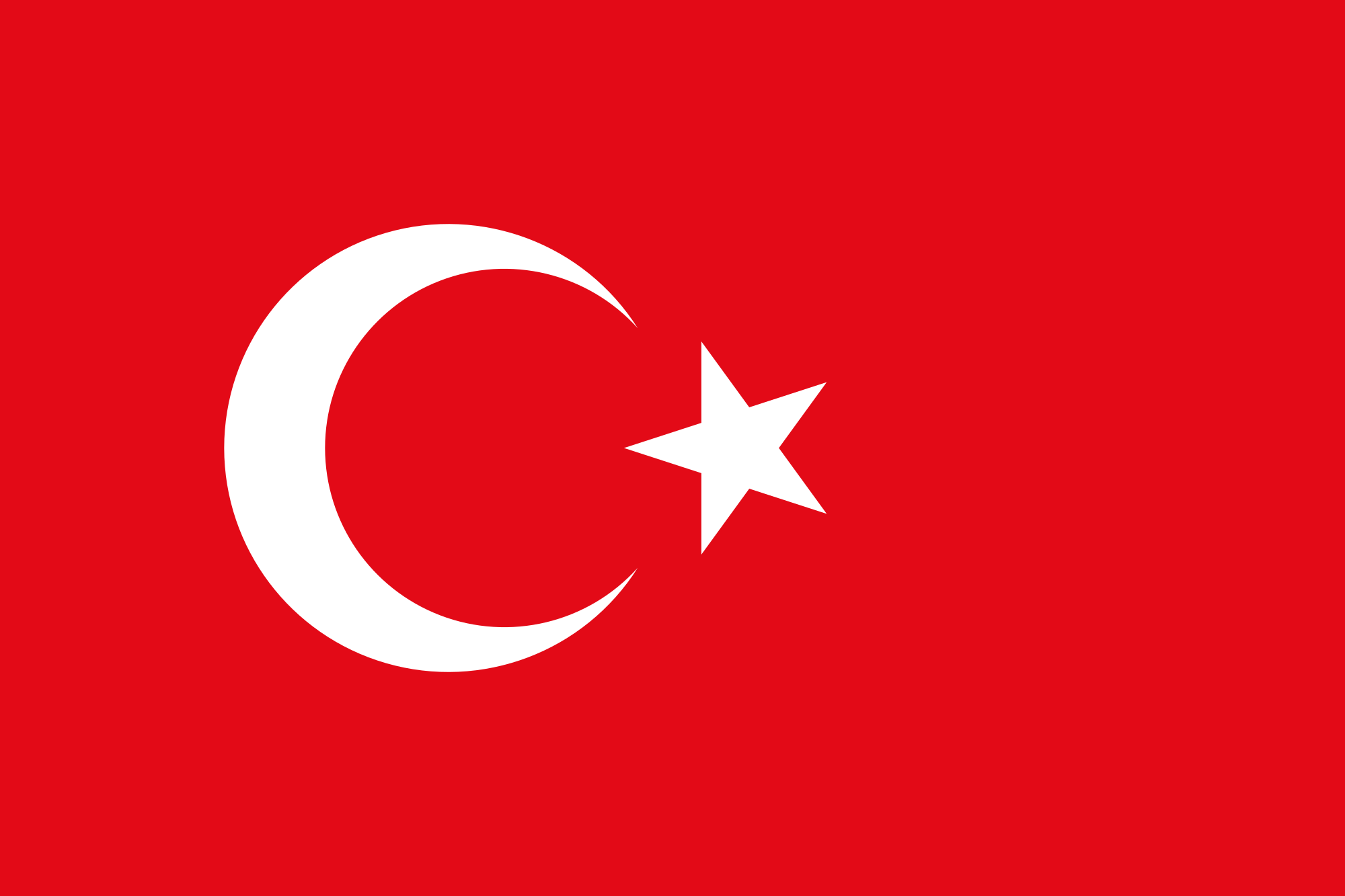 |
| The Flag of Turkey. Source: Wikipedia |
The dog ran to the corner.
Would be written as:
The dog to the corner ran.
Significance:
Being the most widely spoken Turkish language, Turkish is the 20th most known language in the world (counting both native and second-language speakers.) With Turkey occupying the entirety Anatolia, it is a country with a very long and deep history. Historical monuments, architecture, and rich Turkish culture give Turkey a cultural identity that can be fully experienced with knowledge of the Turkish language. Being a category IV language (according to the FSI,) the Turkish language is rather difficult to learn for English speakers, mainly due to its foreign agglutinative nature. However, Turkish can be learned (with motivation) relatively easily due to its familiar alphabet and straightforward word order. Resources like Duolingo offer Turkish lessons, free of charge. Have a good day, and hoşça kal!
Paul Jorgensen on the Youtube channel "Langfocus" has an excellent Turkish language video (see above).

what does agglutination mean?
ReplyDelete